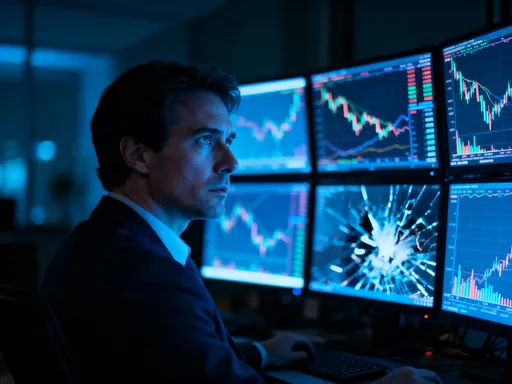
How I Stopped Chasing Returns and Started Smart Fund Management
What if the key to better fund investing isn’t picking the next hot fund—but managing what you already have? I used to jump from one fund to another, chasing high returns, only to end up stressed and underperforming. Then I shifted my focus: not just where I invested, but how I managed it. This changed everything. In this article, I’ll walk you through the practical, real-world strategies that helped me gain control, reduce risk, and build steady progress—without gambling on market swings. These are not theoretical ideas from a finance textbook. They’re proven habits, refined over years of experience, mistakes, and gradual improvement. The goal isn’t to time the market or predict the next bull run. It’s to build a smarter, more resilient approach to managing your funds—one that works whether markets rise, fall, or stay flat.
The Hidden Problem Most Fund Investors Ignore
Many investors spend hours researching which mutual fund or ETF to buy, analyzing past performance, reading prospectuses, and comparing star ratings. Yet, once the investment is made, they step back and assume their job is done. This passive ownership mindset is one of the most common—and costly—mistakes in personal finance. The reality is that fund selection is only the first step in a much longer process. What happens after you invest—how you monitor, adjust, and maintain your portfolio—has a far greater impact on long-term results than the initial choice of fund.
Consider this: two investors buy the same set of funds at the same time. One checks in regularly, rebalances when needed, watches for fee changes, and stays aligned with goals. The other sets it and forgets it. Over ten years, their outcomes can be dramatically different—not because of market luck, but because of management discipline. The first investor avoids emotional decisions during downturns, catches rising risks early, and benefits from systematic rebalancing. The second may drift into an unbalanced portfolio, hold outdated funds, or panic-sell at a market low. Research from Vanguard has shown that disciplined investor behavior, including regular monitoring and rebalancing, can add up to 1.5% in annual returns over time—more than many actively managed funds deliver after fees.
Emotional decision-making is another silent drag on performance. When markets fall, fear kicks in. Investors see red numbers and sell, locking in losses. When markets surge, greed takes over. They pile into high-flying sectors at peak prices, only to suffer when the bubble bursts. These behaviors are predictable and widespread. Morningstar’s Global Investor Returns reports consistently show that the average investor underperforms the very funds they own—sometimes by 2% or more annually—because of poor timing driven by emotion. A structured fund management approach helps counteract this. It creates rules, routines, and checkpoints that remove impulse from the equation. Instead of reacting to headlines, you respond to data and process.
Active management doesn’t mean constant trading or trying to beat the market. It means being intentional. It means knowing why each fund is in your portfolio, tracking whether it still fits, and making adjustments before small issues become big problems. This level of oversight doesn’t require a finance degree or hours each day. It requires consistency, clarity, and a commitment to long-term goals. By shifting focus from selection to management, you take control of the factors you can influence—your costs, your risk level, your discipline—rather than chasing the ones you can’t, like short-term market movements.
Building Your Fund Portfolio Like a Foundation, Not a Gamble
Imagine building a house on sand. No matter how beautiful the design or how strong the materials, the structure will eventually shift, crack, or collapse. The same principle applies to your fund portfolio. Without a solid foundation—built on stability, diversification, and goal alignment—your financial future is vulnerable to market shifts, economic cycles, and personal setbacks. Too many investors treat fund investing like a lottery, searching for the next high-return fund that will transform their wealth overnight. But sustainable financial growth isn’t about luck or speculation. It’s about structure.
A well-constructed portfolio starts with asset allocation—the strategic distribution of your money across different types of funds based on your goals, time horizon, and risk tolerance. This includes a mix of equity funds (for growth), bond funds (for stability), index funds (for broad market exposure), and possibly sector-specific or international funds (for diversification). The exact mix depends on your personal situation. A 40-year-old saving for retirement might have 70% in equities and 30% in bonds. A 60-year-old nearing retirement might reverse that ratio to protect accumulated wealth. The key is not to chase performance but to build balance.
Diversification is not just about owning multiple funds—it’s about owning funds that behave differently under various market conditions. If all your equity funds are concentrated in U.S. large-cap tech stocks, you’re not truly diversified. A market correction in that sector could hit every part of your portfolio at once. True diversification means spreading risk across asset classes, geographies, and investment styles. For example, combining a U.S. total stock market index fund with an international developed markets fund, an emerging markets fund, and a real estate investment trust (REIT) fund creates a more resilient mix. When one area struggles, others may hold steady or even gain, smoothing out overall returns.
Another often-overlooked issue is fund overlap. Many investors assume that owning five different funds means they’re diversified. But if those funds all track similar indexes or hold the same top stocks—like Apple, Microsoft, and Amazon—their performance will move in lockstep. This creates hidden concentration risk. Reviewing fund holdings and sector exposure helps identify overlap. Tools provided by most brokerage platforms allow you to see what percentage of each fund is invested in specific sectors or companies. The goal is to ensure your portfolio isn’t accidentally betting heavily on one area of the market.
Finally, alignment with personal goals is essential. A fund that’s perfect for someone saving for a child’s education may not suit someone building a retirement nest egg. Time horizon matters. A short-term goal, like saving for a home down payment in three years, should rely on stable, low-volatility funds like short-term bond or money market funds. A long-term goal, like retirement 20 years away, can afford more exposure to equities. By anchoring your portfolio to clear objectives, you avoid the temptation to chase trends and stay focused on what truly matters—your financial security and peace of mind.
Why Monitoring Matters More Than You Think
Leaving your funds untouched might seem like a sign of discipline—after all, constant tinkering can lead to poor decisions. But complete inaction is just as risky. Markets change. Fund managers change. Fees change. If you never review your portfolio, you may not realize that your risk level has shifted, your costs have increased, or your original strategy has drifted. Regular monitoring is not about micromanaging. It’s about staying informed and in control.
Consider two hypothetical investors: Sarah and James. Both start with a balanced 60% equity, 40% bond allocation. Sarah reviews her portfolio every quarter. She notices that after a strong stock market year, her equity portion has grown to 75%. She rebalances back to 60/40, selling some equities and buying more bonds. James never looks. Five years later, his equity allocation has climbed to 80% due to market gains. When a recession hits, his portfolio drops sharply—more than he can emotionally or financially handle. He sells at a loss, locking in the damage. Sarah’s disciplined check-ins helped her avoid this fate. She didn’t predict the downturn, but her routine protected her from excessive risk.
Monitoring doesn’t require daily attention. For most investors, a quarterly or semi-annual review is sufficient. During each check-in, focus on key indicators: asset allocation, fund performance relative to benchmarks, expense ratios, and changes in fund management or strategy. A rising expense ratio, even by 0.25%, can erode thousands in returns over time. A change in fund leadership might signal a shift in investment approach. A fund that consistently underperforms its benchmark could be a red flag worth investigating.
Another silent risk is style drift. Some funds gradually move away from their stated investment objective. For example, a small-cap value fund might start buying larger companies or growth-oriented stocks to chase returns. This changes the risk profile and can disrupt your overall portfolio balance. Reading updated fund fact sheets and annual reports helps catch these shifts early. Most fund companies provide this information online, often with clear summaries of holdings, performance, and management commentary.
Monitoring also helps you stay aligned with life changes. A new child, a job change, or an approaching retirement date may require adjustments to your investment strategy. If you don’t review your portfolio, you might miss these opportunities to realign. The goal is not to react to every market blip but to ensure your investments still reflect your goals, risk tolerance, and timeline. This proactive approach turns fund management from a passive activity into a powerful tool for long-term success.
Rebalancing: The Quiet Power Move in Fund Management
Rebalancing is one of the least exciting but most effective practices in fund investing. It involves periodically adjusting your portfolio back to your target asset allocation by selling overperforming assets and buying underperforming ones. On the surface, this may seem counterintuitive—why sell what’s working and buy what’s lagging? But this disciplined approach does two powerful things: it locks in gains and buys low, all while keeping your risk level consistent.
Here’s how it works. Suppose your target allocation is 60% stocks and 40% bonds. After a strong year in the stock market, your portfolio shifts to 70% stocks and 30% bonds. Without rebalancing, you’re now taking on more risk than intended. To rebalance, you sell 10% of your stock funds and use the proceeds to buy bond funds. You’re essentially selling high and buying low—not based on emotion or prediction, but as part of a planned strategy. Over time, this systematic approach can enhance returns and reduce volatility.
A study by Vanguard found that rebalancing can add between 0.3% and 1.0% in annual returns, depending on market conditions and frequency. More importantly, it helps investors avoid the behavioral pitfalls of letting winners run too long or holding onto losers out of hope. Rebalancing removes emotion from the equation. It’s a mechanical process, not a market timing play. You’re not trying to predict which asset will do better next year. You’re simply maintaining your chosen risk level and investment mix.
There are different approaches to rebalancing. Some investors do it on a fixed schedule—once a year or every six months. Others use a threshold method, rebalancing only when an asset class deviates by a certain percentage, such as 5% or 10% from its target. Both methods work. The key is consistency. Automated tools offered by many brokerage firms can alert you when rebalancing is needed or even execute it automatically, making the process simple and efficient.
Rebalancing also reinforces discipline. It trains you to act when others react. While emotional investors buy high and sell low, disciplined investors do the opposite—by design. This doesn’t guarantee profits in every market cycle, but it creates a framework for long-term success. Over decades, the compounding effect of steady, rational decisions far outweighs the occasional home run from a lucky bet. Rebalancing isn’t flashy, but it’s foundational—like changing the oil in your car. It doesn’t make the car faster, but it keeps it running smoothly for years.
Cutting Costs Without Sacrificing Performance
Fees are one of the few factors in investing that you can control—and they have a massive impact on long-term returns. A fund with a 1.0% expense ratio may seem only slightly more expensive than one with a 0.25% ratio, but over 30 years, that difference can cost you tens of thousands of dollars. Unlike taxes or market downturns, fees are predictable and avoidable. Smart fund management means actively identifying and minimizing unnecessary costs.
Start with expense ratios—the annual fee charged by a fund to manage your money. Index funds typically have lower expense ratios than actively managed funds because they don’t require constant research and trading. For example, a broad U.S. stock index fund might charge 0.03%, while an actively managed large-cap fund could charge 0.80% or more. Over time, even a 0.5% difference adds up. On a $100,000 investment, that’s $500 per year—$15,000 over 30 years, assuming no growth. With growth, the gap widens further due to compounding.
But expense ratios aren’t the only cost. Some funds charge front-end or back-end sales loads—commissions paid when you buy or sell. These can range from 3% to 5%, immediately reducing your invested amount. No-load funds, which don’t charge these fees, are widely available and perform just as well. Transaction fees, though less common now, can still apply on certain platforms. Always check the fee structure before investing.
Another hidden cost is tax inefficiency. Some funds generate high capital gains distributions, which trigger taxable events even if you don’t sell. Tax-efficient funds, such as index funds and ETFs, tend to have lower turnover and fewer distributions, making them better for taxable accounts. Holding bond funds or actively traded funds in tax-advantaged accounts like IRAs can also reduce the tax burden.
The good news is that you don’t have to sacrifice performance to cut costs. Numerous studies, including those by Morningstar, show that low-cost funds outperform high-cost funds over the long term. In fact, expense ratio is one of the strongest predictors of future fund performance. By choosing low-cost index funds and ETFs, avoiding sales loads, and being mindful of taxes, you protect more of your returns. This isn’t about chasing gains—it’s about keeping what you earn. Over decades, these savings compound into a larger, more secure retirement fund.
When to Hold, When to Exit: Making Decisions Without Emotion
One of the hardest parts of fund investing is knowing when to let go. Underperformance can trigger doubt. A fund that lags its benchmark for a year or two may seem like a failure. But not all underperformance is a reason to sell. Sometimes, it’s part of a normal cycle. Other times, it signals a deeper problem. The challenge is telling the difference without letting fear or pride interfere.
A rational decision framework helps. Start by evaluating the cause of underperformance. Was the entire asset class down? For example, if your international stock fund is trailing because global markets struggled, that’s context, not a flaw. But if the fund underperforms its peers consistently, even when the category is doing well, that’s a red flag. Look at long-term performance—three, five, ten years—rather than short-term swings. A single bad year doesn’t define a fund, but a decade of underperformance might.
Next, examine changes in fund management or strategy. If the portfolio manager who built the fund’s success has left, and the new team has a different approach, the fund may no longer fit your plan. Similarly, if the fund has drifted from its original mandate—say, a value fund starting to buy growth stocks—it may no longer serve its intended role in your portfolio.
Also consider your personal goals. Has your risk tolerance changed? Are you closer to retirement? A fund that was appropriate ten years ago may now be too aggressive. Regular reviews help you catch these misalignments early. The goal is not to chase returns but to maintain a portfolio that reflects your current needs.
Sometimes, patience is the right move. Markets go through cycles. Value investing may lag during tech booms but outperform during downturns. International funds may struggle when the U.S. dollar is strong but shine when currency conditions shift. Selling in reaction to short-term pain often turns paper losses into real ones. But holding onto a fundamentally broken fund out of loyalty or inertia can be just as costly. The key is to base decisions on evidence, not emotion. Ask: Does this fund still meet its objective? Does it fit my strategy? If the answer is no, it’s time to make a change.
Putting It All Together: A Sustainable Fund Management Routine
Success in fund investing isn’t about making perfect decisions or predicting the market. It’s about building a sustainable routine that keeps you on track, reduces risk, and supports long-term growth. The strategies discussed—monitoring, rebalancing, cost control, and rational decision-making—are most effective when combined into a simple, repeatable process. Here’s a four-step annual review that turns fund management from a chore into a powerful advantage.
First, review your asset allocation. Compare your current mix to your target. Has market movement shifted your balance? If any category is more than 5% off target, consider rebalancing. Second, check fund performance and costs. Are your funds meeting benchmarks? Have expense ratios increased? Are there lower-cost alternatives with similar exposure? Third, assess fund fit. Has management changed? Has the strategy shifted? Does each fund still align with your goals? Finally, confirm your overall plan. Have your financial goals or risk tolerance changed? Do you need to adjust your allocation for retirement, education, or other objectives?
This annual review takes just a few hours but can have a lasting impact. It keeps your portfolio aligned, your costs low, and your decisions rational. Over time, the compounding effect of consistent, thoughtful management leads to better outcomes than any single high-return fund ever could. You won’t make headlines or get rich overnight. But you’ll build wealth steadily, with less stress and more confidence.
Smart fund management isn’t about chasing returns. It’s about creating a system that works for you—regardless of market conditions. It’s about focusing on what you can control: your costs, your discipline, your long-term vision. By shifting from speculation to structure, from emotion to evidence, you turn investing into a reliable path to financial security. And that’s a return worth celebrating.