Tired of late-night photo scrolling keeping you awake? This app gave me my sleep back
We’ve all been there—lying in bed, exhausted, yet still swiping through hundreds of vacation photos, trying to pick the perfect ones to share. What was meant to be a joyful memory becomes a source of stress and sleepless nights. I used to lose hours editing pictures after every trip, my mind racing long after I’d promised myself I’d rest. Then I discovered an app that didn’t just simplify photo editing—it transformed my holiday routine and, unexpectedly, improved my sleep. This isn’t just about filters or fun stickers. It’s about how the right technology can quietly bring calm to your life.
The Vacation Glow-Up That Cost Me My Sleep
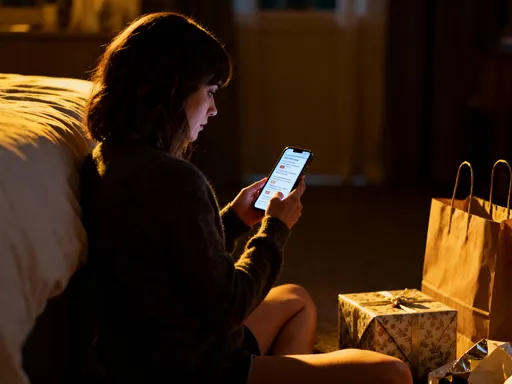
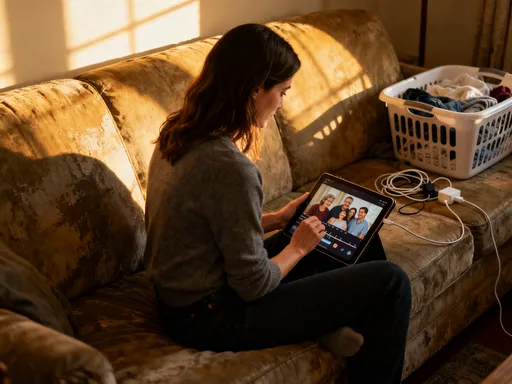
Two summers ago, I returned from a beautiful family trip to the coast feeling anything but refreshed. For five glorious days, we explored seaside towns, laughed over beachside meals, and watched sunsets that looked like they were pulled straight from a dream. But each night, long after the kids were asleep and the suitcases still sat unpacked, I found myself curled up on the couch, phone in hand, eyes wide open. I was knee-deep in photos—hundreds of them. Smiles, seagulls, sand-covered feet, ice cream drips—all moments I wanted to keep. But instead of savoring them, I was sorting, cropping, filtering, questioning: “Is this one too dark?” “Does this make me look tired?” “Will people think we had fun?”
What started as a simple desire to preserve memories quickly turned into an invisible chore. I wasn’t just editing photos—I was editing my self-worth through them. Every decision felt loaded. By the time I finally set my phone down, it was often past midnight. And even then, my mind stayed busy, replaying the shots I hadn’t quite perfected. The next morning, I’d wake up groggy, regretting the late night, promising I’d stop—but then the cycle would repeat. I wasn’t alone, either. When I mentioned this to my friend Lisa over coffee, she groaned and said, “Girl, that’s me after every school break.” Another friend confessed she once spent three hours on a single photo of her daughter blowing out birthday candles. We weren’t just sharing memories—we were performing them. And the cost? Our peace, our time, and our sleep.
Why Photo Editing Became My Nighttime Struggle
It wasn’t just the time—it was the mental weight. Editing photos late at night became more than a habit; it felt like a responsibility. I wanted to show my family at their best, to prove we were living fully, joyfully, beautifully. But in chasing that image, I lost something more valuable: the ability to simply be. Psychologists call this “digital curation stress”—the pressure to present a polished version of our lives, especially after big moments like vacations. And holidays? They’re the ultimate highlight reel. We want the world to see the perfect tan, the flawless meal, the laughing children. So we tweak the shadows, brighten the smiles, and delete anything that doesn’t fit the story.
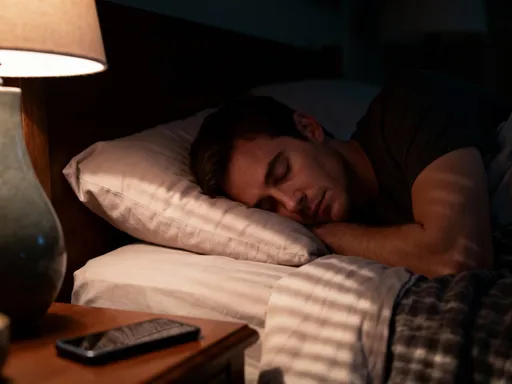
But here’s the thing: your brain doesn’t switch off easily after that kind of mental work. When you’re making decisions—crop this, enhance that, delete or keep—it activates the prefrontal cortex, the part responsible for planning and problem-solving. That’s the last thing you want before bed. Sleep experts consistently warn against screen use before sleeping, not just because of blue light, but because of cognitive stimulation. And photo editing? It’s a double whammy. You’re staring at a bright screen, and you’re making micro-decisions that keep your mind alert. I wasn’t winding down—I was revving up. I’d lie there, eyes closed, still seeing thumbnails in my head, wondering if I should’ve used the “warm sunset” filter instead of “golden hour.” It wasn’t just affecting my sleep; it was stealing the joy from my memories.
Discovering the App That Changed Everything
It was my sister who first mentioned the app. “You’ve got to try this,” she said, showing me a gallery of her recent weekend getaway. The photos looked professional—soft lighting, balanced colors, natural skin tones—but she hadn’t spent hours on them. “It did most of the work,” she said. “I just tapped ‘enhance,’ and it made everything look peaceful, not perfect.” Skeptical but desperate, I downloaded it that night. The interface was clean, calming—no flashy buttons or overwhelming menus. Instead of throwing a hundred filters at me, it offered a single button: “Let’s make these beautiful.”
I uploaded a folder of beach photos, clicked the button, and waited. In less than a minute, the app had enhanced lighting, removed minor distractions like lens spots, and grouped similar shots—waves, family portraits, food—into smart albums. It even suggested gentle edits: “Soften shadows,” “Bring out the blue in the sky,” “Warm up skin tones.” Nothing dramatic. Nothing artificial. Just subtle improvements that made the photos feel more like how I remembered them. And here’s what surprised me most: I didn’t feel the urge to keep tweaking. For the first time, I looked at my vacation pictures and thought, “These are enough.” No more chasing perfection. No more second-guessing. The app didn’t just save me time—it gave me emotional relief. That night, I went to bed an hour earlier than usual. And I actually fell asleep.
How Less Editing Led to Better Rest
The change wasn’t overnight, but it was real. With the app handling the heavy lifting, my relationship with my phone after dinner began to shift. Instead of diving into editing mode, I started flipping through the auto-enhanced photos with my family. We’d laugh at the dog chasing waves or point out the seagull photobombing our picnic. It became a shared moment of joy, not a solo mission of perfection. And because the app did the work quickly—usually in under five minutes—I didn’t feel like I had unfinished business. I could close the app and move on.
Sleep scientists often talk about the importance of a “mental shutdown” before bed. You need to signal to your brain that the day’s tasks are done. For me, photo editing had become an open loop—an unresolved to-do that lingered in the back of my mind. But with the app, that loop closed. I wasn’t leaving things half-finished. I wasn’t telling myself, “I’ll fix it tomorrow.” The photos were ready, and so was I. I started pairing this with other wind-down habits: dimming the lights, brewing herbal tea, and putting my phone on “Do Not Disturb” by 9 PM. The result? Deeper sleep, fewer nighttime awakenings, and mornings that didn’t start with a groan. I wasn’t just sleeping better—I was living better. And it all started with letting go of the need to control every pixel.
A New Way to Cherish Memories—Without the Stress
What surprised me most wasn’t just the sleep—it was how my relationship with memories changed. I used to think that to honor a moment, I had to share it online. But now, I’m more likely to save a photo just for me. The app has a “Private Moments” feature that gently reminds you to enjoy photos without posting. It even offers a “Reflect” mode—soft music, slow slideshow, minimal text—that turns photo viewing into a kind of meditation. One night, I sat with my daughter and scrolled through our beach album this way. No pressure to caption, no need to pick the “best” shot. Just us, the music, and the memories. She said, “This feels like we’re back there.” That’s when it hit me: technology, when designed with care, doesn’t have to pull us away from life. It can help us return to it.
I’ve also started printing more photos—something I hadn’t done in years. The app makes it easy to select a few favorites and order a small album with one tap. Last month, I surprised my mom with a booklet of our summer visit. She cried when she opened it. “These aren’t perfect,” she said, “but they’re real.” That’s the shift I’ve made: from chasing perfection to embracing presence. I’m not trying to impress anyone anymore. I’m trying to remember. And in doing so, I’ve found a quieter kind of joy—one that doesn’t need likes or comments to feel meaningful.
Tips for Using Photo Apps to Support Better Sleep
If you’re tired of trading sleep for social media-ready photos, here are a few things that helped me find balance. First, set a time limit. Decide in advance how long you’ll spend on photos—15 minutes, 30 minutes, whatever feels manageable—and stick to it. Use the auto-enhance feature as your default. Let the app do the work, and resist the urge to “fix” what already looks good. Second, schedule your sharing for daytime. Instead of posting from bed, save it for breakfast or your lunch break. That way, your evening stays sacred.
Third, create a “no-editing” rule after a certain hour—8 PM, 9 PM, whatever works for your routine. Treat it like a bedtime for your phone’s creative mode. Use the app’s wind-down settings if it has them: dimmer screens, calming interfaces, or reminders to pause. Fourth, make digital albums right after your trip, then close the folder. Give yourself permission to be done. And finally, try printing a few favorites. There’s something powerful about holding a photo in your hand—it reminds you that memories don’t live on a screen. They live in your heart. When you stop trying to perfect them, you start truly seeing them.
Technology That Serves Your Life, Not the Other Way Around
Looking back, I realize I wasn’t just struggling with photo editing—I was struggling with the feeling that I had to prove my happiness. That if I didn’t post the perfect shot, the moment didn’t count. But life isn’t a highlight reel. It’s messy, beautiful, fleeting. And the best technology doesn’t ask us to perform. It asks us to pause, to breathe, to remember. The app I found didn’t just make my photos better. It made my nights quieter, my mind clearer, and my heart fuller. It reminded me that tools should serve us, not drain us.
Now, when I return from a trip, I don’t dread the photo pile. I look forward to revisiting the moments—with calm, with love, without pressure. I sleep earlier. I wake up refreshed. And I feel more connected to the people I love, because I’m not hiding behind a screen, trying to make everything look perfect. I’m right here, in the real, unfiltered life. And honestly? That’s the most beautiful filter of all.