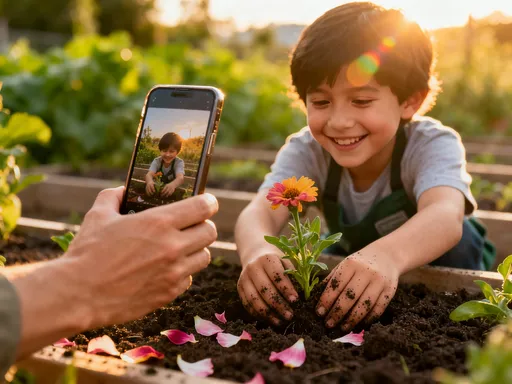
Why Are You Still Missing Precious Family Moments When Your Phone Could Capture Them Automatically?
We’ve all been there—laughing at a child’s silly face, watching parents dance at a wedding, or sharing a quiet morning with someone we love—only to realize later that none of it was recorded. What if your devices could quietly preserve these fleeting moments, without you lifting a finger? Not through complicated apps or manual backups, but by working seamlessly in the background, like an invisible family historian. Let’s explore how smarter use of everyday tech can turn scattered snapshots into meaningful, shared stories. You don’t need to become a tech expert. You just need to know how to let your phone do a little more—so you can be fully present, knowing your memories are already being saved.
The Problem: Beautiful Moments Lost in Digital Chaos
Think about the last time you tried to find a specific family photo. Maybe it was your son’s first soccer game, or your daughter blowing out birthday candles with chocolate smeared on her cheeks. You open your phone, swipe through hundreds of images, and suddenly you're lost in a maze of receipts, random screenshots, and blurry dinner plates. The moment you’re searching for? Buried somewhere, possibly forgotten. This isn’t just inconvenient—it’s emotionally draining. We take photos to hold onto joy, but when they’re disorganized and scattered, the joy fades. We end up feeling like we’re failing our own memories.
And it’s not just about photos. Video clips of your toddler’s first full sentence, a spontaneous kitchen dance party, or your mom telling that old family story—these are priceless. But how often do they get lost in device upgrades, broken phones, or accidental deletions? A 2023 survey by a leading cloud service provider found that over 60% of adults have lost personal photos due to poor digital management. That’s not just data loss—that’s history erased. The irony is, we’re more connected than ever, yet our most precious moments feel more fragile. We’re capturing everything, but preserving nothing. And the burden of fixing it—sorting, labeling, backing up—feels like just another chore on an already long list.
Here’s the truth: you shouldn’t have to choose between living in the moment and saving it. You shouldn’t need to stand behind the camera every time something beautiful happens. The good news? You don’t. Technology has evolved beyond just taking pictures. It can now help you *keep* them—intelligently, quietly, and automatically. The shift isn’t about doing more; it’s about letting your devices do the heavy lifting, so you can focus on what matters: being there.
Rethinking Family Growth Records: From Storage to Storytelling
For years, we’ve treated our photo libraries like digital shoeboxes—dump everything in, hope you can find it later. But today’s smartphones and cloud services are capable of so much more. They don’t just store images—they can understand them. With built-in artificial intelligence, your phone can now recognize faces, identify locations, and even detect emotions and events. This means it can automatically group your child’s birthday parties year after year, pull together every photo from your annual beach trip, or create a highlight reel of your dog’s funniest moments—without you ever tagging a single thing.
Imagine opening your phone one morning and seeing a notification: “Here’s how Emma grew this year.” You tap it, and a gentle slideshow begins—her first day of school, her messy art project, her proud smile after learning to ride a bike. The video is already edited, set to soft music, with dates and locations quietly labeled. No effort on your part. This isn’t science fiction; it’s available on most modern devices today. These “memory” features aren’t just gimmicks. They’re thoughtful tools designed to help you see the story in your snapshots.
And it’s not just about looking back. These smart albums can help you notice patterns you might have missed. You might realize your family laughs most during weekend breakfasts, or that your daughter always wears her blue hat to the park. These insights add depth to your memories. They turn random photos into a narrative—a living timeline of your family’s journey. The best part? You don’t have to plan for it. The technology works in the background, learning from your habits and quietly building a story that’s uniquely yours. It’s like having a family archivist who never forgets, never complains, and never asks for a raise.
Take Control with Smart Organization (Without the Stress)
Now, you might be thinking, “That sounds great, but I don’t have time to learn a new system.” Here’s the good news: you don’t need to. Most of these tools are already on your phone—you just need to turn them on. Start with facial recognition. When enabled, your device learns to identify family members and automatically groups their photos. No more scrolling to find your nephew’s school play. Just search his name, and there they are. It works for pets too—yes, your dog deserves his own album.
Next, use date and location clustering. Instead of endless scrolling, your phone can organize photos by day, trip, or event. Went to the apple orchard in October? There’s already a folder for it. Celebrated Grandma’s birthday at the same restaurant every year? The phone can link those moments together, showing how the tradition has grown. And keyword search? It’s a game-changer. Type “birthday cake” or “Christmas morning,” and your phone pulls up every relevant image, even if you never labeled them.
To keep things clean, enable duplicate detection. Most cloud services can spot and suggest removing repeated or blurry photos—freeing up space and making your library easier to navigate. And don’t underestimate the power of automatic backups. Set your phone to back up to a trusted cloud service when connected to Wi-Fi and charging. That way, even if your device is lost or damaged, your memories are safe. The key is to set it once and forget it. This isn’t about perfection. It’s about creating a system that works quietly in the background, so you can stop worrying and start enjoying.
Share Without Overwhelming: Creating Meaningful Family Updates
Sharing family moments is one of the greatest joys of modern tech—but it can also become a burden. How many times have you sent a full album of 50 photos to your sister, only to hear back, “I didn’t have time to look at all of them”? Or posted a birthday video on a family group chat, only to see it disappear under grocery lists and memes? The intention is connection, but the result is often clutter.
Smart sharing tools can change that. Instead of dumping every photo, let your phone create curated highlights. Most devices now offer automatic video reels—short, beautifully edited clips set to music, featuring the best moments from a day or event. You can send one of these to your parents after a family gathering, and suddenly, they feel like they were there. One mom told me, “My mom lives three hours away. Now, instead of me saying, ‘We had fun,’ she gets to *see* it. It means everything to her.”
Shared albums are another powerful option. Create one for a special event—say, your son’s first year—and invite close family members. They can view, add their own photos, or leave comments. It becomes a collaborative memory space. And because it’s selective, it doesn’t flood anyone’s feed. You can also schedule automatic updates. Some platforms let you set up monthly memory videos that are sent to grandparents or relatives, giving them a regular, low-effort way to stay connected.
The goal isn’t to share everything—it’s to share what matters. When you send a thoughtful, condensed story instead of a flood of images, people are more likely to engage, remember, and feel included. It turns sharing from a chore into a gesture of love.
Protect What Matters: Privacy Meets Peace of Mind
Now, I know what some of you are thinking: “Wait—my phone is watching me? Learning my family’s faces? That sounds a little creepy.” And that’s a completely valid concern. The idea of technology “seeing” our private moments can feel unsettling. But here’s the thing: you’re not giving up control. You’re choosing to use smart tools wisely—and with the right settings, you can enjoy the benefits without the risks.
Start with privacy-focused platforms. Many leading services now offer end-to-end encryption for photos and videos, meaning only you and the people you share with can access them—not even the company can see them. Look for this feature when choosing a cloud provider. Next, review your permissions. You can choose whether facial recognition is on, who has access to shared albums, and whether your device creates public-facing suggestions. These aren’t all-or-nothing choices. You can customize them to fit your comfort level.
Set clear boundaries for family access. For example, you might let your partner see everything, but give your parents a shared album with only select photos. Or allow your sister to view but not download images. Most platforms let you control these settings with a few taps. And remember: automation doesn’t mean abandonment. You’re not letting the machine decide everything. You’re setting the rules, then letting it help you follow through.
Think of it like a home security system. You install cameras to protect your family, but you control who sees the footage. The same principle applies here. With thoughtful settings, you can have both convenience and privacy. And that peace of mind? It’s priceless.
Beyond Photos: Capturing Voice, Growth, and Milestones
Family memories aren’t just visual. They’re in the sound of your child’s laugh, the way your dad tells a joke, the lullaby you sing every night. That’s why expanding beyond photos can make your archive even richer. Voice notes are a simple, powerful tool. Use your phone’s voice recorder to capture your toddler’s first attempt at singing the alphabet, or your grandmother sharing a family recipe in her own words. These clips are often more emotional than any photo could be.
There are also simple apps that help you track growth in fun, meaningful ways. Height charts are classic—but digital ones let you add photos, notes, and dates, creating a timeline you can share. Milestone journals let you log first steps, first words, or annual traditions like “best Halloween costume.” Some even send gentle reminders: “It’s been a year since your daughter’s first day of school—want to add a note?”
And don’t forget about family traditions. Did you make pancakes every Sunday? Did you go stargazing on birthdays? Use your calendar or a notes app to record these moments. Over time, you’ll see patterns emerge—proof of the routines that shaped your family’s story. One woman I spoke with started a digital recipe journal, adding her mom’s handwritten dishes with photos and voice notes. “Now,” she said, “when I cook them, it feels like she’s right there with me.”
These tools don’t require extra time. They work with the moments you’re already living. And when you look back, you won’t just see faces—you’ll hear voices, feel emotions, and remember the full texture of your life.
Building a Legacy: From Memories to Meaning
At the end of the day, this isn’t really about technology. It’s about love. It’s about wanting your children to know how tiny they once were, how much they were adored, how their laughter filled the house. It’s about giving future generations a window into the ordinary, beautiful moments that made your family unique. And it’s about giving yourself the gift of remembrance—because life moves fast, and even the clearest memories can fade.
When we rely on memory alone, we lose details—the exact shade of your daughter’s hair on her first day of kindergarten, the way your husband danced at your sister’s wedding, the sound of rain during that quiet morning when everyone was still asleep. But when technology quietly preserves these things, we don’t have to hold them all in our heads. We can let go, be present, and trust that the moment is being held for us.
And one day, maybe years from now, someone will tap on a video, hear a voice, see a smile—and feel connected to a moment they never lived. That’s not just data. That’s legacy. That’s love made visible.
You don’t need to be perfect at this. You don’t need to capture every second. Just start small. Turn on memory suggestions. Create one shared album. Record one voice note. Let your phone do a little more, so you can do a little less—and be a lot more present. Because the best memories aren’t the ones we chase with a camera. They’re the ones we live in—and the ones that live on, quietly, thanks to the tools we already carry in our pockets.